
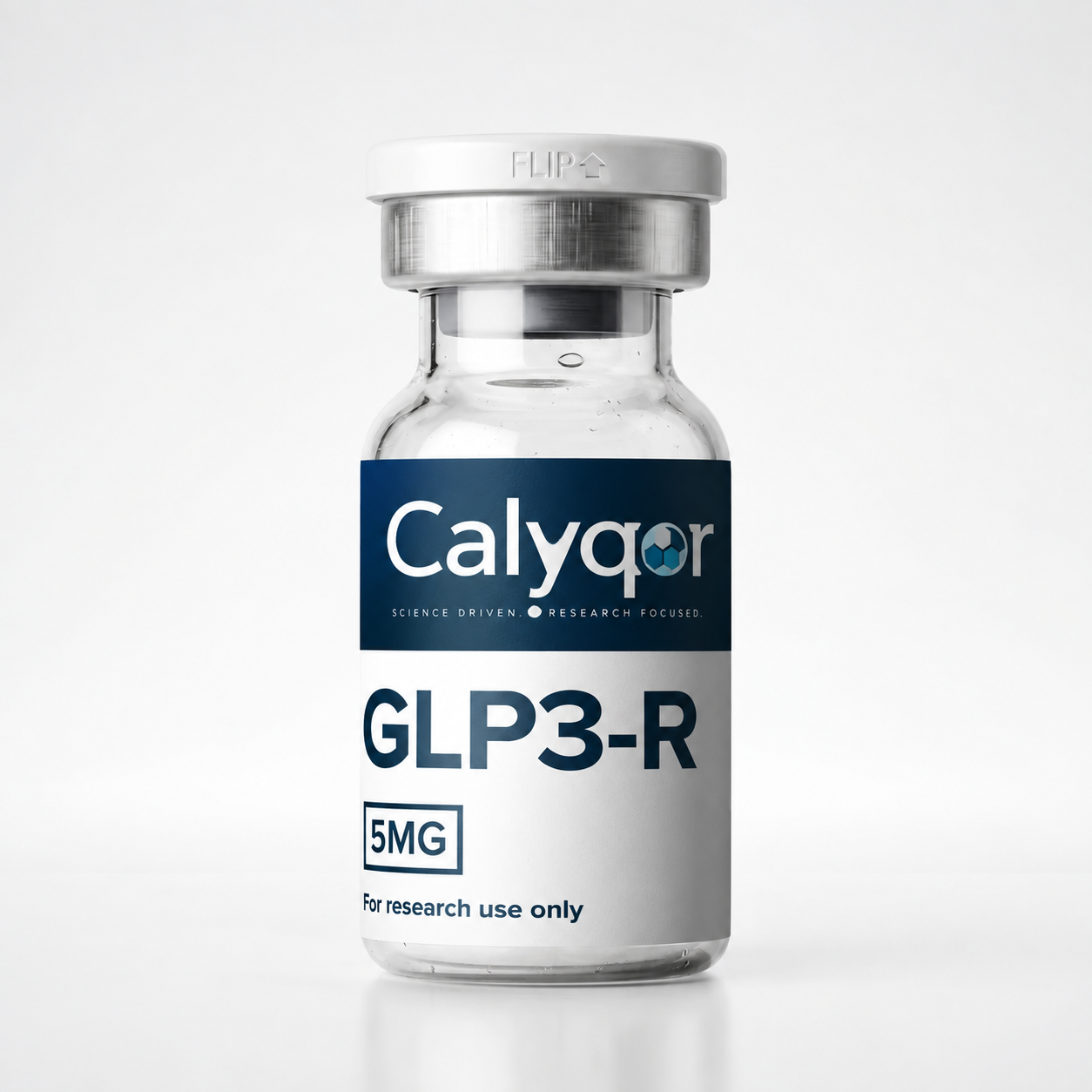
Description
What GLP3-R is
GLP3-R is a synthetic 39-amino-acid triple incretin/glucagon receptor agonist. GLP3-R (Retatrutide/LY3437943) is a first-in-class triple agonist targeting GIP, GLP-1, and glucagon receptors simultaneously. Phase 3 TRIUMPH-4 trial (2026) showed 28.7% weight loss at 12mg/68 weeks — the highest ever reported. Additional Phase 3 data shows A1C reductions of 1.7-2.0%, up to 100% liver fat reduction in MASLD, and 14 mmHg systolic BP reduction. FDA approval projected for 2027. It has a mass 4624.2 Da. Common synonyms in the literature include Retatrutide, retatrutide, and LY3437943.
What it’s studied for
Investigation of GLP3-R to date is clinical-investigational, with the majority of citations concentrated in animal models and in-vitro assays rather than randomized controlled human trials. Published work referencing GLP3-R spans Phase 2 obesity trial (NEJM 2023): In 338 adults with BMI ≥30 (or ≥27 with comorbidities), glp3-r achieved dose-dependent weight loss: 8.7% (1 mg), 17.1% (4 mg), 22.8% (8 mg), and 24.2% (12 mg) at 48 weeks vs. 2.1% placebo. Weight loss trajectory showed no plateau, suggesting continued efficacy beyond 48 weeks, Phase 2 type 2 diabetes trial: In adults with T2D, glp3-r showed HbA1c reductions of 2.0% and significant weight loss while maintaining glycemic control despite glucagon component. Safety profile similar to GLP-1 agonists, and Ongoing Phase 3 TRIUMPH program: Multiple trials initiated in 2023-2024 including obesity (TRIUMPH-3), obesity with CKD, obesity with knee osteoarthritis (TRIUMPH-4), obesity with chronic low back pain, cardiovascular outcomes (5-year CVOT), and head-to-head comparison vs. glp2-t. Proposed mechanisms in the literature include GLP-1 receptor agonism: glucose-dependent insulin secretion, appetite suppression, delayed gastric emptying and GIP receptor agonism: enhanced insulin sensitivity, potentiation of GLP-1 effects, improved lipid handling. None of this material describes therapeutic outcomes in humans, and BioInfinity does not sell, market, or provide dosing guidance for GLP3-R outside laboratory research.
Laboratory handling — storage and reconstitution
Lyophilized GLP3-R arrives as a fluffy off-white solid inside a sealed sterile vial. Because it ships as a lyophilized research compound (4624.2 Da), the powder is best stored between 2–8 °C prior to reconstitution and returned to −20 °C in aliquots for long-term storage post-reconstitution. Reconstitution is typically performed with bacteriostatic water (0.9 % benzyl alcohol preserved) rather than sterile water because the preservative extends solution stability once the vial has been punctured. Warming the reconstituted solution to room temperature before drawing helps redissolve any peptide that has settled against the vial wall. Avoid repeated freeze–thaw cycles: for peptides in this molecular-weight range (4624.2 Da), freeze–thaw stress is one of the most common causes of loss-of-purity between batches.
How this batch is verified
Every batch of GLP3-R ships with a batch-specific Certificate of Analysis produced by an ISO-accredited third-party analytical laboratory. Reversed-phase HPLC confirms the assay against the expected 4624.2 Da mass; mass spectrometry validates the exact monoisotopic mass; endotoxin (LAL) testing confirms bacterial-contamination limits appropriate for laboratory research; and residual-solvent panels confirm the manufacturing pipeline. The lot number on the outer label matches the COA on the public /coa-library page — every purity claim is independently verifiable before you open the vial.
Related research
For the full mechanistic profile, published references, and constraint notes on GLP3-R, see the GLP3-R research page. All references cited on that page are peer-reviewed primary literature.
Research use only. GLP3-R is sold strictly for in-vitro and animal research. It is not a drug, food, supplement, or cosmetic and is not intended for human or veterinary consumption. No statements on this page describe or imply any therapeutic effect.
Reviews
There are no reviews yet.